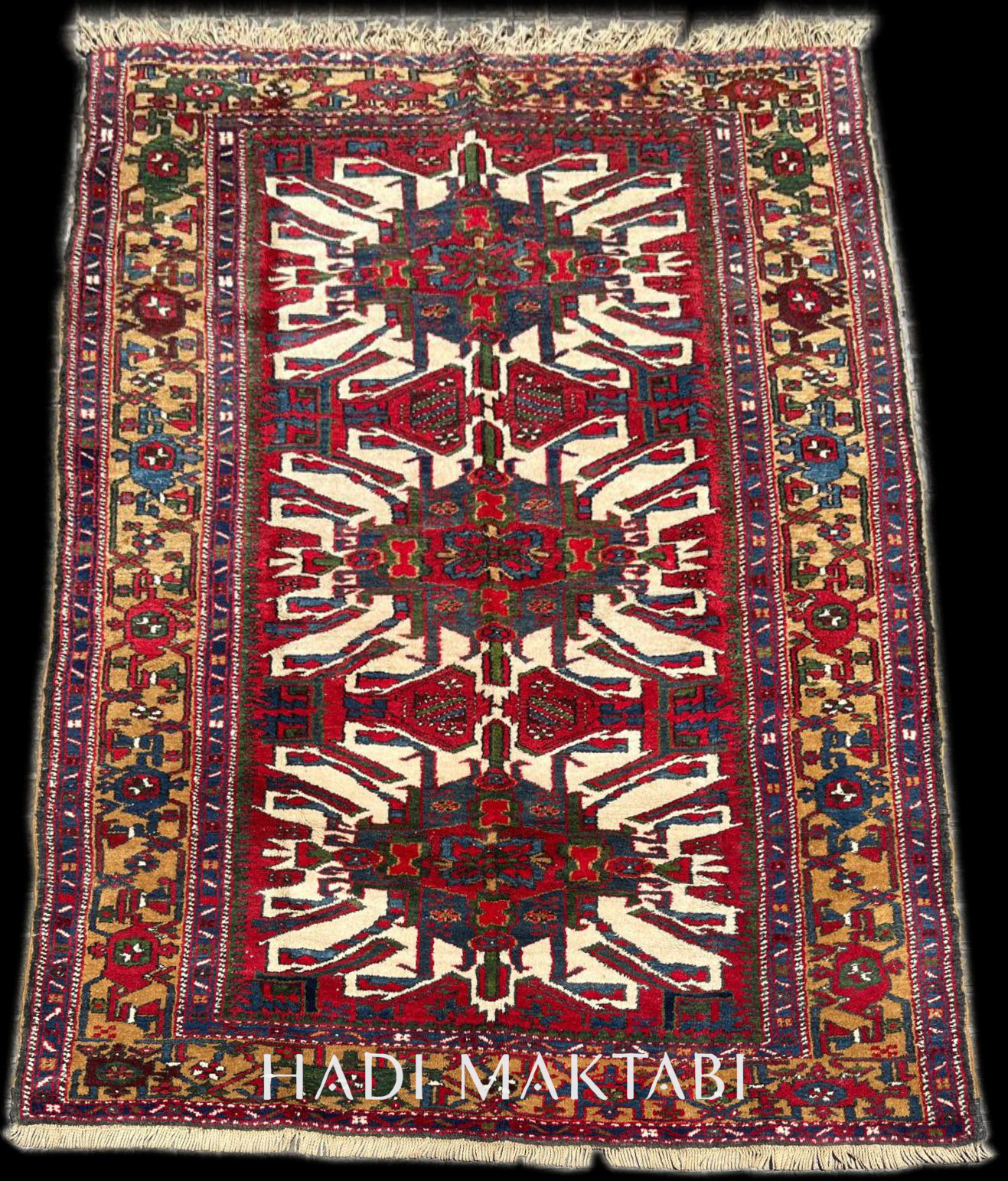
Number 1712
Type Caucasian
Material Wool
Style Geometric
Origin Heriz
Size 200 x 148
Age 1920
This is a terrific fusion piece. In weave it is distinctly a Heriz district rug, with marked Karaja area technical characteristics. In art, we see the world famous 'Eagle' (Adler) design associated with the Caucasian village of Chelabert. Ottoman dealers called them Chelebi rugs, Germans used the term Adler, and the English preferred Eagle Karabagh.
However, research has shown that such rugs were woven in the village of Barjid, where Shahasavan clans settled in the aftermath of the Russo-Persian wars of 1801-1828. The village is in the far north of Heriz county, close to their ancestral homelands across the Aras (Araxes) River dividing modern Persia from its ancient borderland provinces of Armenia and Azerbaijan in the Caucasus.
Full, meaty pile with solid natural dyes.
Best of both worlds.
As a carpet collector of 30 years, I have noticed a decline in the amount of truly unique and high quality carpets on the market. I have also noted a decline in the knowledge of merchants, generally. Hadi Maktabi stands against this trend as a both a curator for and an educator of his clients. His offerings are well-researched, museum quality carpets that are both singular and expertly chosen. In dealing with Hadi, I have experienced excellent communication, a high standard of service and extremely pleasant interactions. Warren D., Hong Kong 🇭🇰
“You don’t just buy a rug from Dr Maktabi... It’s an experience, a rich one! You learn about history, culture & art. And more importantly you feel euphoric!” Dr Siamak Abolhassani, Expert Medical Care Clinics, Victoria, Australia 🇦🇺
I first met Dr. Maktabi as a lecturer on carpet history and was captivated by his passion for the subject. Only later I knew him as a dealer, though even in our financial transactions, Hadi has been a gentle guide and friend. He has understood my taste and interests and made wonderful suggestions, but never in a pushy way. That is to say I have enjoyed working with him on several levels and wish to continue our excellent relations and dealings far into the future. A. Harvey Pincis, formerly Dar Al Athar Al Islamiyyah Museum (Kuwait), Latvia 🇱🇻



 Email List
 Request Offer